
Catalytic vs Non-Catalytic Wood Stoves: How They Burn and Which to Choose
Catalytic and non-catalytic wood stoves compared from the EPA's guidance and the certified list: how each burns smoke, upkeep, catalyst life and which suits you.
Affiliate disclosure: product links on this page go to Amazon or to the maker's own store. As an Amazon Associate we earn from qualifying purchases, at no extra cost to you; links to makers' own stores earn us nothing. No retailer or brand sees our picks before they are published or has any say in them. How we choose.
To meet the EPA's limit, a wood stove has to burn the smoke a fire gives off, and there are two ways to do it, the EPA explains: a catalyst, or a firebox built for very hot secondary burning. Both work, and both appear on the EPA's certified list; the differences are in how the heat comes out, what the stove asks of you, and what wears out.
Side by side
| Point | Catalytic | Non-catalytic |
|---|---|---|
| How smoke burns | In a coated ceramic honeycomb (EPA) | Insulated firebox, baffle, preheated air (EPA) |
| Heat | Long, even output (EPA) | Hotter cycles through each load (our reading) |
| Controls | Bypass damper for starting and loading (EPA) | Air control only (our reading) |
| What wears | The catalyst (EPA) | Baffle and some internal parts (EPA) |
| Market | Some popular high-end stoves (EPA) | Most stoves sold (EPA) |
How a catalytic stove works
The smoky exhaust passes through a coated ceramic honeycomb inside the stove, where the gases and particles ignite and burn, the EPA says. Every catalytic stove has a lever-operated bypass damper that is opened for starting and reloading, so smoke goes around the catalyst until the stove is hot (EPA).
How a non-catalytic stove works
Non-catalytic stoves rely on three features, the EPA explains: firebox insulation, a large baffle that makes a longer, hotter gas path, and preheated combustion air fed through small holes above the fuel. US Stove's manuals warn never to run their stoves with the secondary tubes, fiberboard or insulation removed, since those parts do this work.
Using the bypass
The bypass damper is opened to start the fire and to reload, the EPA says, so smoke can go straight up the flue while the firebox is cool or the door is open. Once the stove is hot, closing the bypass sends the smoke through the catalyst to burn; follow your stove's manual for when (EPA; our reading).
Catalyst life
The EPA says a catalyst can last more than six seasons with proper use, but may break down in as little as 2 years if the stove is overfired, burns garbage or treated wood, or is not cleaned and maintained. Its durability is largely in the user's hands, the EPA adds.
What ruins a catalyst
- Overfiring the stove (EPA).
- Burning garbage or treated wood; the EPA says garbage should never be burned in a stove (EPA).
- Skipping regular cleaning and maintenance (EPA).
The same habits shorten a non-catalytic stove's baffle and tubes too, since both designs run hot inside (our reading).
Upkeep
A catalytic stove asks you to open and close the bypass at the right times and to look after the catalyst, which is why the EPA says catalytic stoves suit people who like technology and will maintain them. A non-catalytic stove's baffle and some internal parts need replacing from time to time as they wear from the high heat (EPA).
Examples on the certified list
Buck Stove's Model 91 and Carolina 92 appear on the EPA list as catalytic stoves at 1.3 grams an hour and 80% efficiency, while its Model 81 is non-catalytic at 1.1 grams and 70%. Every pick in our wood stove guide, and the Buck Model 81 insert, is non-catalytic.
How common each type is
Of the 255 wood stoves certified to the 2020 limits in our download of the EPA list, 157 were non-catalytic, 64 catalytic and 34 hybrid (EPA database; our count). That matches the EPA's note that most stoves on the market are non-catalytic, with catalytic combustion in some popular high-end models.
Heat and burn time
Burn time is where the two designs feel most different in daily use, more than emissions (our reading).
The EPA says catalytic stoves can produce a long, even heat output, which suits a house that needs steady heat overnight. A non-catalytic stove gives a brighter fire and a hotter, shorter peak through each load, so it suits a room you heat in the evening (our reading).
Hybrid stoves
The EPA list also includes hybrid stoves, which combine a catalyst with secondary air; Hearthstone's Castleton 8031 is one example at 0.98 grams an hour. They aim for the low emissions of a catalyst with the forgiving burn of a non-catalytic design (our reading).
Questions to ask before buying
- Is it catalytic, non-catalytic or hybrid, and what does the manual ask of you (EPA; our reading)?
- What does a replacement catalyst or baffle cost and how easy is it to change (our reading)?
- Is it on the EPA's certified list, and under which test (EPA database)?
- Will you be home to tend it, or do you need a long, steady burn while away or asleep (our reading)?
Reading the chimney
The EPA suggests going outside and looking at the chimney: visible smoke usually means the fire needs more air. With either design, a clean burn shows little smoke once the stove is hot (EPA; our reading).
Reloading
Open the door slowly when reloading so smoke does not spill into the room, the EPA advises, and keep a hot coal bed with about an inch of ash in the firebox. On a catalytic stove, open the bypass before the door, as the EPA's description of the bypass implies (EPA; our reading).
Wood matters more than the design
Both kinds depend on dry wood: the EPA says to burn only wood seasoned for at least six months and below 20% moisture, and to build hot fires rather than letting a fire smolder. Wet wood cools the fire and leaves more creosote in either design (EPA; our reading).
Which to choose
- Choose catalytic for long, steady, lower-output burns in a well-insulated house, and if you will run the bypass and look after the catalyst (EPA; our reading).
- Choose non-catalytic for simpler operation, a bright fire view and fewer parts to replace over the years (EPA; our reading).
- Either way, burn dry wood: the EPA says wood burns best below 20% moisture.
See EPA certification explained for how to read the list.
Frequently asked questions
Are catalytic wood stoves better?
Not always: the EPA says both approaches meet the limits; catalytic stoves give a long, even heat but need more care, while non-catalytic ones are simpler.
How long does a wood stove catalyst last?
More than six seasons with proper use, the EPA says, but as little as 2 years if the stove is overfired, burns trash or is poorly maintained.
What is the bypass damper on a catalytic stove?
A lever-operated damper opened for starting and reloading, so smoke goes around the catalyst until it is hot (EPA).
Do non-catalytic stoves need parts replaced?
Yes: the EPA says the baffle and some internal parts need replacing from time to time.
Which kind is more common?
Non-catalytic: the EPA says most stoves on the market are non-catalytic, with catalytic combustion in some popular high-end stoves.
Sources
- Choosing the Right Wood-Burning Stove (Burn Wise), U.S. Environmental Protection Agency
- EPA-Certified Wood Stove Database, U.S. Environmental Protection Agency
- US1100E (Defender II) owner's instruction and operation manual, United States Stove Company
- Best Wood-Burning Practices (Burn Wise), U.S. Environmental Protection Agency
Related guides
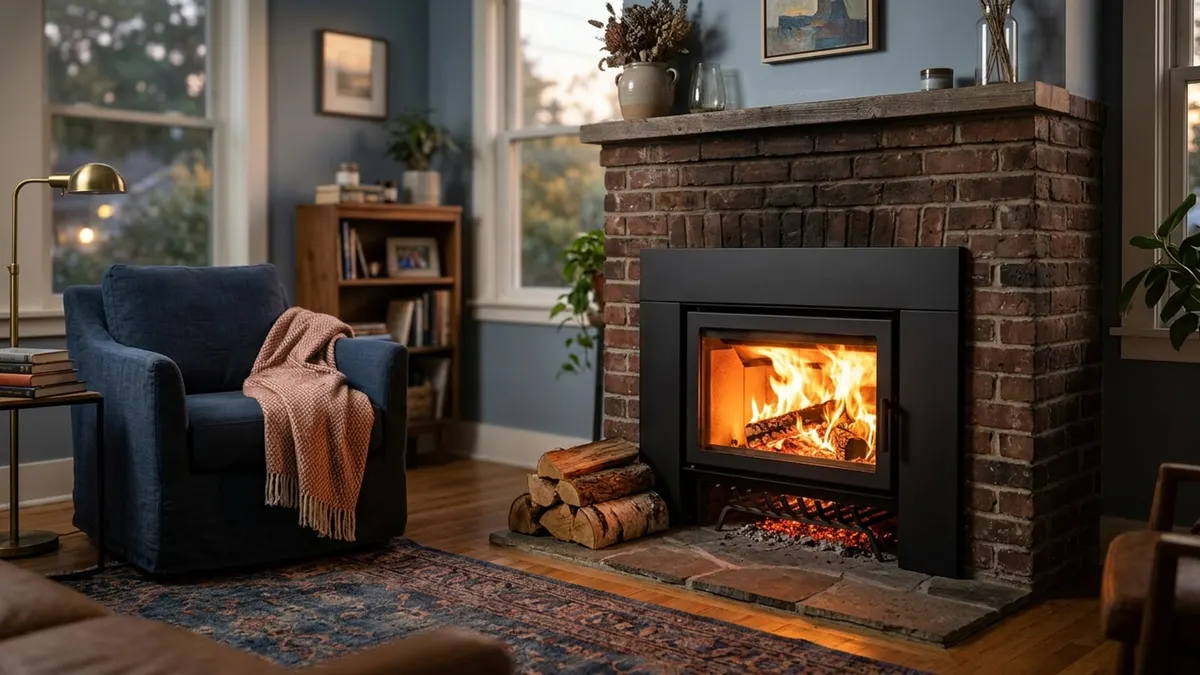
Best Fireplace Inserts (2026): Pellet, Wood and Electric Compared
The ComfortBilt HP22i is our pick: a pellet insert with 1.542 grams an hour and up to 41,810 BTU in its manual, vented through a stainless liner in a masonry fireplace.
Best Wood Stoves (2026): EPA-Certified Stoves From the Manuals
The US Stove US1100E is our pick: its manual gives 15,196 to 40,594 BTU an hour from an 18 inch log firebox, and the EPA list shows its line certified to the 2020 rules.
EPA-Certified Wood Stoves: The 2020 Limit, the Label and How to Check
Since May 15, 2020 every wood heater made or sold in the United States must emit no more than 2.0 grams of smoke an hour, or 2.5 on the cord wood test. Here is how to check one.