
EPA-Certified Wood Stoves: The 2020 Limit, the Label and How to Check
What EPA certification means for wood and pellet stoves: the 2.0 and 2.5 gram limits since May 2020, the label, the certified list, and what is exempt.

Affiliate disclosure: product links on this page go to Amazon or to the maker's own store. As an Amazon Associate we earn from qualifying purchases, at no extra cost to you; links to makers' own stores earn us nothing. No retailer or brand sees our picks before they are published or has any say in them. How we choose.
EPA certification is the federal emission limit for wood heaters, which include wood stoves, fireplace inserts and pellet stoves. The rule is 40 CFR Part 60, subpart AAA, and since May 15, 2020 it caps smoke at 2.0 grams an hour, or 2.5 grams for stoves tested with cord wood. Here is what that means when you buy one.
The limits
| From | Limit | Test |
|---|---|---|
| May 15, 2015 | 4.5 g/hr weighted average | Standard test |
| May 15, 2020 | 2.0 g/hr weighted average | Standard (crib wood) test |
| May 15, 2020 | 2.5 g/hr weighted average | Cord wood alternative |
The EPA says older uncertified stoves release 15 to 30 grams of smoke an hour, and that some newer stoves are certified in the 1 to 4 gram range across the older and newer rules. A lower grams-an-hour figure means a cleaner, more efficient stove (EPA).
What the rule covers
A wood heater, in the rule's words, is an enclosed wood-burning appliance for space heating, including adjustable and single burn rate heaters and pellet stoves. Fireplace inserts count whether they are freestanding, built in or inserts, under the rule's definition of an adjustable burn rate heater.
What is exempt or covered elsewhere
- Camp stoves for tents and temporary shelters, which must be labeled not a certified residential wood heater (40 CFR 60).
- Cook stoves with an oven of at least 1 cubic foot, designed and warranted mainly for cooking (40 CFR 60).
- Coal-only heaters and corn-only pellet stoves sold without wood burning claims (40 CFR 60).
- Hydronic heaters and forced-air furnaces, which have their own rule, subpart QQQQ; see the outdoor wood furnace guide.
- Masonry heaters and site-built masonry fireplaces, which are not covered (40 CFR 60; EPA).
How to check a stove
- Look for the permanent EPA label on the back of the stove, as the EPA advises.
- Search the EPA's certified wood heater database by maker or model; it lists emission rate, heat output, efficiency, fuel and whether the model meets the 2020 limit.
- Match the model number on the label to the database entry; many stoves are sold under several names in one model line (our reading of the database).
What the database shows
For each certified heater the EPA's database gives the maker and model, appliance type, emission rate, heat output, efficiency, carbon monoxide, certified fuel and whether it meets the 2020 limit. Our download on November 29, 2026 listed 418 heaters certified to the 2020 rules: 255 wood stoves, of them 157 non-catalytic, 64 catalytic and 34 hybrid, and 163 pellet stoves (EPA database; our count).
Pellet stoves on the list
Pellet stoves are certified under the same rule, and the EPA says certified pellet stoves usually run at 70 to 83% efficiency with heating capacities from 8,000 to 90,000 BTU an hour. They are listed alongside wood stoves in the database (EPA).
Crib wood and cord wood tests
The rule allows two test paths: the standard test, with a 2.0 gram limit, and a cord wood test with a 2.5 gram limit. The database names the certified fuel for each stove, so a 2.4 gram figure on a cord wood stove, like US Stove's US1100E line, is within its limit (EPA database; 40 CFR 60.532).
One stove, many names
The EPA list groups model lines: US Stove's US1100E line includes Comfort Glow's CGWS1500 under its NM680 number, and the TH-100 line includes the CGWS750. Canyon Lodge and Cleveland Iron Works stoves appear under Enerco Group's model lines. See the wood stove and pellet stove guides.
Reading the numbers
The database shows a heat output range, not one number; makers often advertise a first-hour peak instead. US Stove's US1100E is listed at 68,000 BTU while its EPA test range tops out at 40,594, and its manual explains the advertised figure is the first hour at high burn. Efficiency is given as HHV, the higher heating value, which US Stove's manual notes reads lower than an LHV figure for the same stove.
Operating it as certified
ComfortBilt's and US Stove's manuals both say it is against federal regulations to operate the stove in a way inconsistent with its manual, and ComfortBilt's adds that the factory minimum burn rate must not be altered and that a modified stove is no longer compliant. Burn only the fuel the manual names: dry wood for wood stoves, graded pellets for pellet stoves (EPA; manuals).
Why it matters at home
A certified stove burns less wood for the same heat and makes less smoke; the EPA says an EPA-certified stove with dry, seasoned wood makes less smoke, and that fine particles in smoke can get into the eyes and respiratory system. Burning dry wood matters as much as the stove: see the moisture meter guide.
Pellet and wood stoves share the rule
The same 2.0 and 2.5 gram limits apply to pellet and wood stoves alike, so a certified pellet stove and a certified wood stove meet the same bar on paper (40 CFR 60.532; our reading).
Old stoves
The EPA says most stoves in homes are not EPA-certified, and suggests upgrading an old stove to a cleaner appliance: gas, a heat pump or an EPA-certified stove. Before May 2020, a voluntary hangtag marked stoves that already met the 2020 limit (EPA).
Tax credits
The EPA's page points buyers to the federal clean energy tax credits; check the IRS's current rules for biomass stoves before counting on one, since credits change (our reading).
Frequently asked questions
What does EPA certified mean for a wood stove?
It has been tested to emit no more than the federal limit: 2.0 grams of smoke an hour since May 15, 2020, or 2.5 on the cord wood test (40 CFR 60.532).
How do I check if my wood stove is EPA certified?
Look for the permanent EPA label on the back, or search the EPA's certified wood heater database by maker and model.
Are pellet stoves EPA certified too?
Yes: the rule covers pellet stoves as wood heaters, and the EPA says it certifies over 90 pellet stoves.
Are tent stoves EPA certified?
No: they are camp stoves, labeled not a certified residential wood heater and for portable and temporary use only.
How much cleaner is a certified stove?
Older uncertified stoves release 15 to 30 grams an hour, the EPA says, against today's 2.0 gram limit.
Sources
- 40 CFR Part 60 Subpart AAA: Standards of Performance for New Residential Wood Heaters, Electronic Code of Federal Regulations
- Choosing the Right Wood-Burning Stove (Burn Wise), U.S. Environmental Protection Agency
- EPA-Certified Wood Stove Database, U.S. Environmental Protection Agency
- Pellet Stoves (Burn Wise), U.S. Environmental Protection Agency
- US1100E (Defender II) owner's instruction and operation manual, United States Stove Company
- HP22 pellet stove manual, ComfortBilt (SMG Hearth & Home)
- Wood Smoke and Your Health (Burn Wise), U.S. Environmental Protection Agency
Related guides
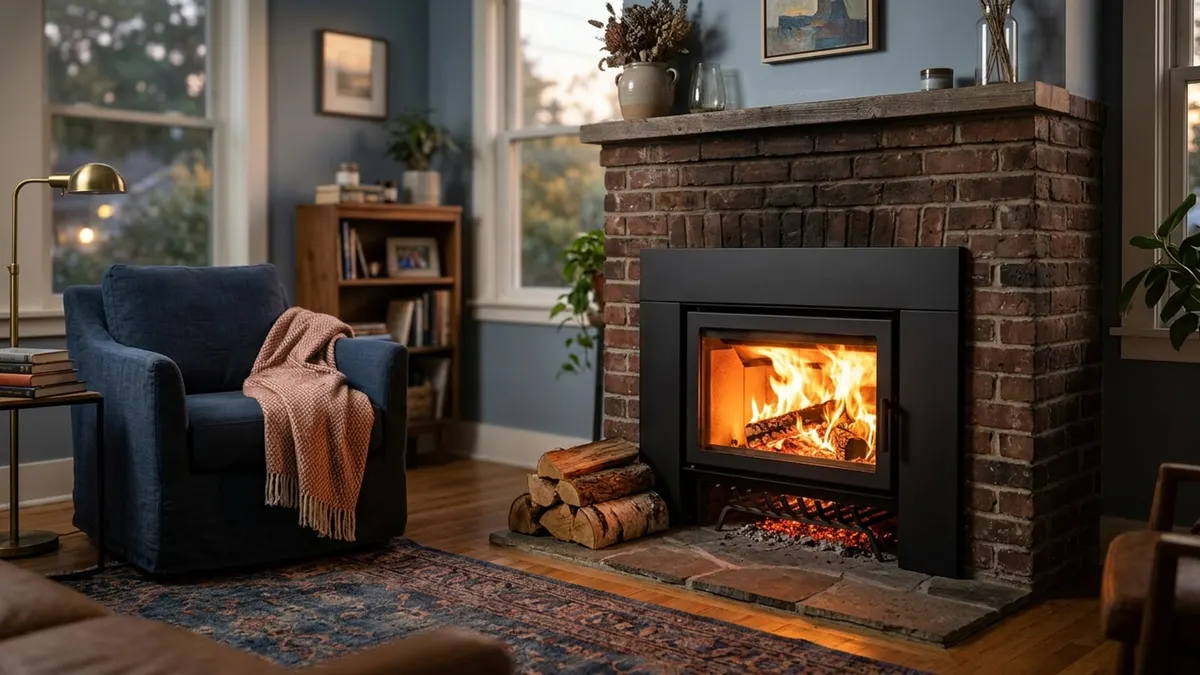
Best Fireplace Inserts (2026): Pellet, Wood and Electric Compared
The ComfortBilt HP22i is our pick: a pellet insert with 1.542 grams an hour and up to 41,810 BTU in its manual, vented through a stainless liner in a masonry fireplace.

Best Wood Stoves (2026): EPA-Certified Stoves From the Manuals
The US Stove US1100E is our pick: its manual gives 15,196 to 40,594 BTU an hour from an 18 inch log firebox, and the EPA list shows its line certified to the 2020 rules.

Catalytic vs Non-Catalytic Wood Stoves: How They Burn and Which to Choose
Both meet the same EPA limit. A catalytic stove burns smoke in a coated honeycomb for a long, even heat; a non-catalytic one uses a baffle and hot air and is simpler to run.