
Outdoor Wood Furnaces and Wood Boilers: The 2020 Rules and How They Work
Outdoor wood furnaces and wood boilers explained: how hydronic heaters and forced-air furnaces work, the EPA's 2020 limits, fuel rules and what to ask first.
Affiliate disclosure: product links on this page go to Amazon or to the maker's own store. As an Amazon Associate we earn from qualifying purchases, at no extra cost to you; links to makers' own stores earn us nothing. No retailer or brand sees our picks before they are published or has any say in them. How we choose.
The name outdoor wood furnace usually means a hydronic heater, also called a wood boiler or outdoor water stove: it burns wood outside and sends heated water, or water and antifreeze, through underground pipes into the house, as the EPA describes. They fall under a separate federal rule from wood stoves, 40 CFR Part 60 subpart QQQQ, and they are mostly sold through dealers rather than online, so this guide explains the rules and the questions to ask rather than ranking models.
Two kinds of central wood heater
| Point | Hydronic heater | Forced-air furnace |
|---|---|---|
| Moves heat by | Water or water and antifreeze in pipes (EPA) | Air through ducts with a blower (EPA) |
| Where | Inside or outside the building (EPA) | Usually indoors (EPA) |
| Fuel | Cord wood, pellets, chips or corn (EPA) | Cord wood, pellets or chips (EPA) |
| 2020 limit | 0.10 lb per million BTU; 0.15 cord wood option | 0.15 lb per million BTU |
The 2020 limits
Since May 15, 2020, a residential hydronic heater may not be made or sold unless certified to 0.10 pounds of particulate per million BTU of heat output on each burn rate, or 0.15 pounds under the cord wood test option (40 CFR 60.5474). Forced-air furnaces must meet 0.15 pounds per million BTU on the cord wood test, and the EPA describes large furnaces as 65,000 BTU an hour or more and small ones as less.
These limits are written per unit of heat, not per hour like a stove's, because central heaters vary so much in size (our reading).
Fuel rules
- Heaters certified for wood chips may burn only chips specified in the manual, with moisture under 35% and ash no more than the rule allows (40 CFR 60.5474).
- Heaters certified for pellets may burn only pellets the manual names, graded under a licensing agreement with an EPA-approved third party (40 CFR 60.5474).
- No trash, treated wood or other prohibited fuels, under the same rule.
Chip and pellet fuel limits
For wood chips the rule sets moisture below 35%, inorganic fines at 1% or less and chlorides at 300 parts per million or less, with an ash limit as well (40 CFR 60.5474). Pellet boilers, which the EPA counts as hydronic heaters, must burn pellets graded by an EPA-approved third party.
How to check a model
The EPA's certified heater database has a separate search for central heaters, covering forced-air furnaces and hydronic heaters, with emission rate, heat output and efficiency. Ask the dealer for the model's certification and test results before buying (our reading).
Where they are used
The EPA says hydronic heaters heat homes, barns, greenhouses and garages, and can sit inside or outside the buildings they heat. Some burn pellets, chips or corn as well as cord wood, the EPA notes, but each must burn only the fuels its manual names under the 2020 rule.
Siting and smoke
An outdoor unit sits away from the house, but its smoke still reaches neighbors; check local rules on setbacks and stack height, which many towns set for outdoor boilers (our reading). The EPA's advice for any wood burner applies: burn only dry, seasoned wood below 20% moisture and never trash.
What the install involves
- A level concrete or gravel foundation pad for the unit, away from the house (our reading).
- Insulated underground pipe from the unit to the house, buried below the frost line (our reading).
- A heat exchanger tied into the house's existing furnace, boiler or water heater (our reading).
- Water treatment and antifreeze where the manual calls for it, checked each season (our reading).
Most of these are dealer installations, often with a plumber and electrician involved; follow the maker's manual, local codes and any permit the town requires (our reading).
Wood for a big firebox
Outdoor units burn large loads of wood, so the EPA's firewood advice matters more: split wood dries faster, season it at least six months, and burn it below 20% moisture. Wet wood wastes heat boiling off water and leaves more creosote, the reason the EPA stresses dry wood for every appliance (EPA; our reading). A moisture meter settles the question before the wood goes in (our reading).
Questions to ask a dealer
- Is the model on the EPA's certified central heater list, and under which test and fuel (EPA database)?
- What heat output does it give at each burn rate, and how big a load does it need to run cleanly (our reading)?
- What water treatment, antifreeze and annual service does the manual require (our reading)?
- What setbacks and stack heights does your town require (our reading)?
Cleaner options
The EPA says even the cleanest wood heater emits significantly more smoke than gas stoves and other cleaner options, and suggests using a wood heater for supplemental heat or as a backup in power outages. It also describes masonry heaters, which store the heat of fast, hot fires in a large masonry mass and release it slowly, and which do not need EPA certification.
Alternatives inside the house
A certified indoor wood stove or pellet stove heats the room it sits in with no pipes to bury; see the wood stove and pellet stove guides, or pellet versus wood.
Burning it well
Outdoor units burn large loads, so dry wood matters more: test it with a moisture meter and store it on a firewood rack with only the top covered, as the EPA advises.
Frequently asked questions
What is an outdoor wood furnace?
Usually a hydronic heater: it burns wood outside and pipes hot water or antifreeze into the house, as the EPA describes.
Are outdoor wood boilers EPA regulated?
Yes: since May 15, 2020 hydronic heaters must be certified to 0.10 pounds of particulate per million BTU, or 0.15 under the cord wood option (40 CFR 60.5474).
What can I burn in an outdoor wood boiler?
Only the fuels its manual names, such as dry cord wood; chips and pellets must meet the rule's requirements, and trash is prohibited.
Can I buy an outdoor wood furnace on Amazon?
They are mostly sold and installed through dealers; check the EPA's central heater database for certified models.
What is the difference between a hydronic heater and a forced-air furnace?
A hydronic heater moves heat with water in pipes; a forced-air furnace moves heated air through ducts with a blower (EPA).
Sources
- 40 CFR Part 60 Subpart QQQQ: Standards of Performance for New Residential Hydronic Heaters and Forced-Air Furnaces, Electronic Code of Federal Regulations
- Choosing Wood-Burning Appliances (Burn Wise), U.S. Environmental Protection Agency
- EPA-Certified Wood Stove Database, U.S. Environmental Protection Agency
- Best Wood-Burning Practices (Burn Wise), U.S. Environmental Protection Agency
Related guides
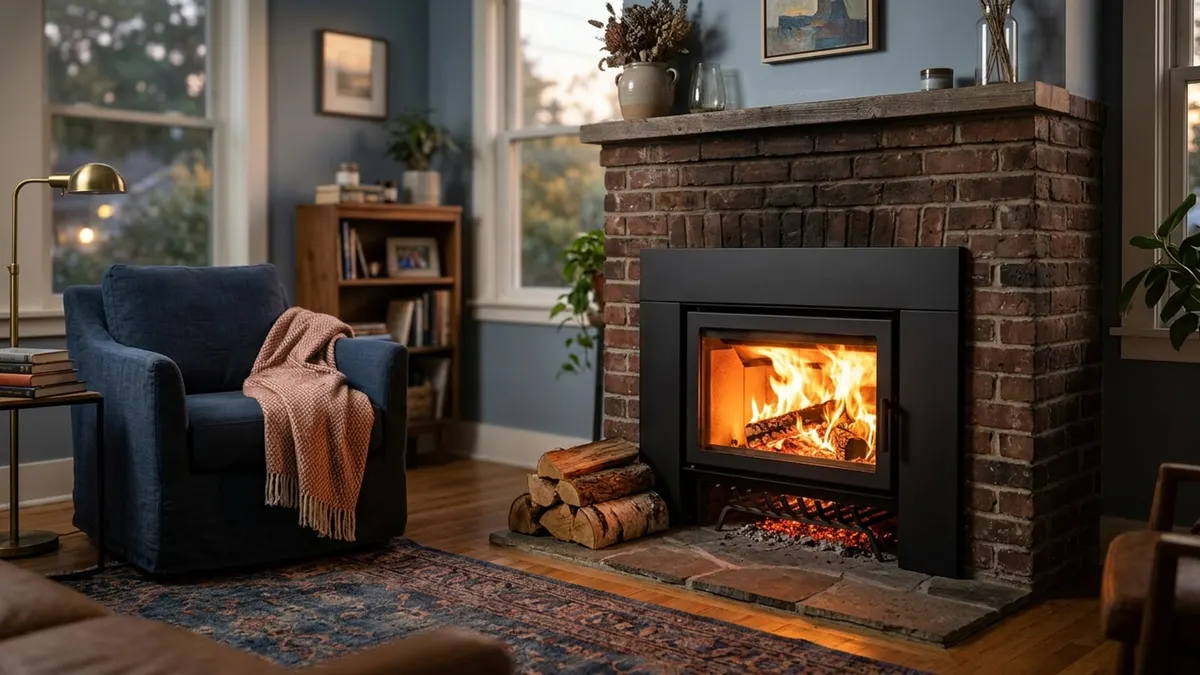
Best Fireplace Inserts (2026): Pellet, Wood and Electric Compared
The ComfortBilt HP22i is our pick: a pellet insert with 1.542 grams an hour and up to 41,810 BTU in its manual, vented through a stainless liner in a masonry fireplace.
Best Wood Stoves (2026): EPA-Certified Stoves From the Manuals
The US Stove US1100E is our pick: its manual gives 15,196 to 40,594 BTU an hour from an 18 inch log firebox, and the EPA list shows its line certified to the 2020 rules.
Catalytic vs Non-Catalytic Wood Stoves: How They Burn and Which to Choose
Both meet the same EPA limit. A catalytic stove burns smoke in a coated honeycomb for a long, even heat; a non-catalytic one uses a baffle and hot air and is simpler to run.