
Best Carbon Monoxide Detectors for Stove Homes (2026): Kidde, First Alert
Carbon monoxide alarms for homes with stoves compared: Kidde plug-in and battery models, First Alert, and an X-Sense combo, with the CPSC's placement advice.
Affiliate disclosure: product links on this page go to Amazon or to the maker's own store. As an Amazon Associate we earn from qualifying purchases, at no extra cost to you; links to makers' own stores earn us nothing. No retailer or brand sees our picks before they are published or has any say in them. How we choose.
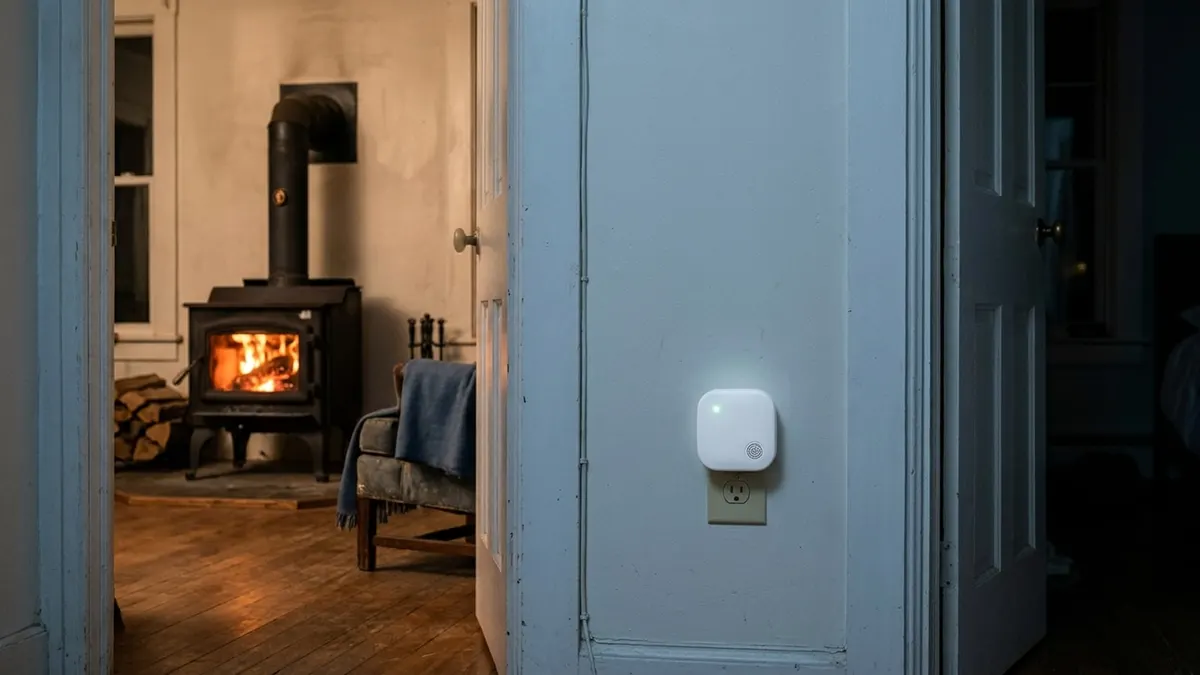
Carbon monoxide is colorless and odorless, and the CPSC says more than 200 people in the United States die each year from accidental non-fire CO poisoning tied to consumer products. A stove, insert or furnace that spills fumes is one source. The CPSC's advice is to install battery-operated CO alarms, or alarms with battery backup, on every level of the home and outside sleeping areas, and it says interconnected alarms are best.
Kidde's COP is our pick: a plug-in CO alarm on 120 volts with two AA backup batteries for outages, an 85 decibel alarm and a 10-year limited warranty (per the listing).
Our top picks at a glance
- Kidde Plug-In Carbon Monoxide Alarm with Battery Backup
Power: Plug-in, 120 V · Backup: 2 AA · Display: LED lights · Warranty: 10-year limited
- Kidde Battery-Powered Carbon Monoxide Alarm
Power: 2 AA · Backup: Battery only · Display: LED lights · Warranty: 10-year limited
- First Alert Plug-In Carbon Monoxide Alarm
Power: Plug-in · Backup: 9 V · Display: None · Warranty: 7-year limited
- X-Sense SC07 Smoke and Carbon Monoxide Alarm
Power: Sealed lithium · Backup: 10-year battery · Display: LCD · Warranty: 5-year quality warranty
| Pick | Power | Backup | Display | Warranty | Buy |
|---|---|---|---|---|---|
| Kidde Plug-In Carbon Monoxide Alarm with Battery BackupBest overall | Plug-in, 120 V | 2 AA | LED lights | 10-year limited | Amazon |
| Kidde Battery-Powered Carbon Monoxide AlarmBest battery | 2 AA | Battery only | LED lights | 10-year limited | Amazon |
| First Alert Plug-In Carbon Monoxide AlarmBest First Alert | Plug-in | 9 V | None | 7-year limited | Amazon |
| X-Sense SC07 Smoke and Carbon Monoxide AlarmBest combo | Sealed lithium | 10-year battery | LCD | 5-year quality warranty | Amazon |
Plug-in power with battery backup and a rotating plug.
- Power
- Plug-in, 120 V
- Backup
- 2 AA
- Display
- LED lights
- Warranty
- 10-year limited
Pros
- Battery backup during outages (per the listing)
- Power surge immunity
- Rotating plug fits most outlets
Cons
- No CO level display
- Needs a free outlet
Kidde's COP runs on 120 volt power with two AA batteries as backup, so it keeps detecting during a power cut, and sounds an 85 decibel alarm with LED warning lights (per the listing).
Kidde's COPD adds a backlit display that shows CO levels and no low battery chirps (per the listing).
Best battery
Kidde Battery-Powered Carbon Monoxide Alarm
A wire-free AA alarm for any wall or shelf.
- Power
- 2 AA
- Backup
- Battery only
- Display
- LED lights
- Warranty
- 10-year limited
Pros
- Mounts anywhere, no outlet needed (per the listing)
- Works through outages
- 85 dB alarm
Cons
- Batteries to change
- No CO level display
Kidde's COB runs on two AA batteries, mounts on a wall or sits on a table, and sounds an 85 decibel alarm (per the listing).
With no cord it can go wherever the CPSC's advice puts an alarm, such as a hallway with no outlet (per the listing; our reading).
Best First Alert
First Alert Plug-In Carbon Monoxide Alarm
A plug-in alarm with 9 volt backup.
- Power
- Plug-in
- Backup
- 9 V
- Display
- None
- Warranty
- 7-year limited
Pros
- Electrochemical sensor (per the listing)
- 85 dB alarm
- Battery backup
Cons
- 9 volt backup, not AA
- No display
First Alert's CO606 plugs into a standard outlet with a 9 volt battery backup, uses an electrochemical sensor and sounds an 85 decibel alarm, with a 7-year limited warranty (per the listing).
Its battery-only CO400 carries a 5-year limited warranty (per the listing).
Smoke and CO in one alarm with a 10-year sealed battery.
- Power
- Sealed lithium
- Backup
- 10-year battery
- Display
- LCD
- Warranty
- 5-year quality warranty
Pros
- UL 217 and UL 2034 certified (per the listing)
- Photoelectric smoke sensor
- No battery changes for a decade
Cons
- SC07 is standalone; SC07-W interconnects
- Not hardwired
X-Sense's SC07 combines a photoelectric smoke sensor and an electrochemical CO sensor, runs on a sealed 10-year lithium battery, and is listed as certified to UL 217 for smoke and UL 2034 for carbon monoxide.
The SC07 is a standalone unit; the listing points to the SC07-W for wireless interconnection, which the CPSC says is best because every alarm sounds when one does.
Where to put them
- On every level of the home (CPSC).
- Outside each sleeping area (CPSC).
- In the room with the stove, in addition: ComfortBilt's manual asks for separate CO monitors for the areas near the stove.
- Smoke alarms on each floor too, away from the stove and close to sleeping areas, as ComfortBilt's manual advises.
The picks side by side
| Alarm | Power | Display | Warranty |
|---|---|---|---|
| Kidde COP | 120 V plug-in, 2 AA backup | LED lights | 10-year limited |
| Kidde COPD | 120 V plug-in, 2 AA backup | CO level display | 10-year limited |
| Kidde COB | 2 AA | LED lights | 10-year limited |
| First Alert CO606 | Plug-in, 9 V backup | None | 7-year limited |
| First Alert CO400 | Battery | None | 5-year limited |
| X-Sense SC07 | Sealed 10-year lithium | LCD | 5-year quality warranty |
Plug-in, battery or sealed
A plug-in alarm with battery backup, like Kidde's COP, runs on house power and keeps working in an outage; a battery alarm goes anywhere but needs new batteries; a sealed 10-year alarm like X-Sense's SC07 never needs batteries until it is replaced (per the listings). The CPSC accepts any of these so long as the alarm has battery power or a battery backup.
Symptoms and what to do
The CPSC lists the symptoms of CO poisoning as headache, dizziness, weakness, nausea, vomiting, sleepiness and confusion. If you suspect it, get outside to fresh air at once and call 911, the CPSC says.
Power outages and generators
CO alarms need battery power or a battery backup to work in an outage, which is when stoves run hardest and generators come out (CPSC; our reading). The CPSC says never to use a portable generator inside a home or garage, even with doors and windows open, and to run it at least 20 feet from the house with the exhaust pointed away.
Heating fires
The U.S. Fire Administration says heating was the second leading cause of home fires in 2021, with an estimated 32,200 home heating fires, and that portable heaters caused only 3% of home heating fires in 2017 to 2019 but 41% of the fatal ones. It says to turn space heaters off when leaving the room or going to bed, never to use an oven to heat the home, and to have heating equipment and chimneys cleaned and inspected each year.
Buy a known, certified alarm
The CPSC has warned consumers to stop using several little-known detectors: two combination smoke and CO detectors over a fire hazard, and a plug-in natural gas and CO detector that failed to alert to deadly CO. Look for a maker with a record and a UL 2034 listing for carbon monoxide, which the X-Sense listing names (CPSC; per the listing; our reading).
How many you need
Count one for each level, one outside each sleeping area, and one in the room with the stove: a two-story house with bedrooms upstairs and a stove downstairs usually needs three or four (CPSC; ComfortBilt; our reading). Interconnected alarms, like X-Sense's SC07-W version, make sure an alarm by the stove wakes people upstairs (per the listing; CPSC).
Pellet stoves in a power cut
When the power fails, a pellet stove's exhaust blower stops; ComfortBilt says to keep the doors and ash pan closed so the vent drafts naturally and smoke stays out of the house. This is when a battery-backed CO alarm earns its place (ComfortBilt; CPSC; our reading).
Testing and replacement
Check the batteries regularly, the CPSC says, and after any long power cut. Test alarms monthly with the test button and replace them by the date on the back or as the warranty period ends (our reading).
Displays
A display like the Kidde COPD's shows the CO level before it reaches the alarm point, which helps spot a stove that spills a little smoke on reloading before it becomes a danger (per the listing; our reading).
Which to choose
- A hallway outlet outside the bedrooms: Kidde COP, or the COPD to see CO levels (per the listings).
- A spot with no outlet, or travel: Kidde COB (per the listing).
- A ceiling where a smoke alarm is also needed: X-Sense SC07, or the SC07-W to interconnect (per the listing).
Stoves and CO
A stove spills CO when its vent is blocked, its doors are left open, or the house is under negative pressure; ComfortBilt says to keep doors and ash pans closed, and US Stove's outside air kit is required in tight houses that pull smoke back in. Both pellet stove installation and wood stove installation are covered step by step.
Frequently asked questions
Where should I put a carbon monoxide detector?
On every level of the home and outside sleeping areas, the CPSC says; ComfortBilt also asks for separate CO monitors near the stove.
Do I need a CO detector with a pellet stove?
Yes: ComfortBilt's HP22 manual asks for CO monitors near the stove and smoke detectors on each floor.
What are the symptoms of carbon monoxide poisoning?
Headache, dizziness, weakness, nausea, vomiting, sleepiness and confusion, per the CPSC; get outside and call 911.
Should CO alarms have battery backup?
Yes: the CPSC says battery-operated alarms or alarms with battery backup, so they work in an outage.
Are interconnected CO alarms better?
The CPSC says interconnected alarms are best, since when one sounds they all sound.
Sources
- Carbon Monoxide Information Center, U.S. Consumer Product Safety Commission
- HP22 pellet stove manual, ComfortBilt (SMG Hearth & Home)
- US1100E (Defender II) owner's instruction and operation manual, United States Stove Company
- Heating Fire Safety, U.S. Fire Administration
Cover image: Illustration: Pellet Stove Review
Related guides
Best Ash Buckets (2026): Metal Buckets With Lids for Stove Ash
Ash stays hot for days. US Stove says to put it in a metal container with a tight lid on a noncombustible surface. Pure Garden's 4.75 gallon bucket is our pick.

Best Hearth Pads and Stove Boards (2026): Size and Type From the Manual
A stove on a combustible floor needs a listed floor protector of the size and type its manual gives. ComfortBilt's 40 inch corner pad is our pick for most pellet stoves.

Best Heat-Powered Wood Stove Fans (2026): Picks and Placement
A heat-powered fan spins on the stove top with no cord and pushes warm air across the room. Freedom Stoves' 13 inch, 348 CFM fan is our pick for a large flat-top stove.