
Chimney Liners for Stoves and Inserts: Sizes, Stainless Kits and Rules
When a stove or insert needs a chimney liner, how to size it from the manual, what a 316 stainless kit includes, and why the chimney still needs inspecting.

Affiliate disclosure: product links on this page go to Amazon or to the maker's own store. As an Amazon Associate we earn from qualifying purchases, at no extra cost to you; links to makers' own stores earn us nothing. No retailer or brand sees our picks before they are published or has any say in them. How we choose.
A chimney built for an open fireplace is usually much bigger than a stove's or insert's flue, and a flue too large or too small hurts draft; US Stove's manuals ask for a chimney flue the same inside diameter as the stove's exhaust. A liner, a stainless pipe run down inside the old chimney, gives the right size. The EPA says a certified installer should make sure the liner is installed correctly when an insert goes into a masonry chimney.
When a liner is needed
- A pellet insert in a masonry fireplace: ComfortBilt's HP22i manual calls for a stainless steel chimney liner and says never to connect the insert straight to the masonry chimney.
- A wood insert in a masonry fireplace, with the liner fitted by a certified installer, as the EPA advises.
- A stove connected to an old masonry chimney whose flue is far larger than the stove's collar (US Stove; our reading).
- A masonry chimney with a damaged or missing clay liner, found at inspection (our reading).
Sizing
Match the liner to the appliance's flue, not to the chimney: 3 or 4 inch for pellet stoves and inserts, and 6 inch for US Stove's wood stoves (ComfortBilt; US Stove). ComfortBilt's HP22i moves up to 4 inch when the vent or liner runs over 18 feet or the house is above 5,000 feet, and US Stove says a flue smaller than the stove's exhaust causes draft problems.
| Kit | Diameter | Length | Typical use |
|---|---|---|---|
| Rockford 4 x 15 | 4 in | 15 ft | Pellet insert (our reading) |
| Rockford 6 x 15 | 6 in | 15 ft | Wood stove or insert, short chimney (our reading) |
| Rockford 6 x 25 | 6 in | 25 ft | Wood stove or insert, two-story chimney (our reading) |
| Rockford 8 x 15 | 8 in | 15 ft | Larger flue collars (our reading) |
The 4 inch kit, 6 by 15, 6 by 25 and 8 inch kit are all 316 stainless flexible liners listed to UL 1777 in the United States and ULC S635 in Canada, with do-it-yourself instructions (per the listings).
Why size matters
Too large a flue lets the gases cool and slow, which hurts draft and builds creosote; too small a flue restricts the exhaust, and US Stove says it causes draft problems (US Stove; our reading). An inside chimney stays warmer than an outside one, which US Stove says reduces creosote, and a liner helps an outside chimney in the same way (US Stove; our reading).
Measuring length
Measure from the appliance's connection to the top of the chimney crown and add enough to reach the cap, then round up to the next kit length; a liner can be trimmed at the top, as ComfortBilt's insert steps describe (our reading; ComfortBilt).
What a kit includes
Rockford's listings describe a complete kit tightened with clamps, with a warranty its listing says transfers to the next homeowner (per the listings). Check the parts list for the top plate, cap and connector before ordering, since stoves and inserts connect differently (our reading).
Pellet vent as a liner
DuraVent lists its PelletVent as a masonry reliner, and in that use gives 0 inches of clearance from the vent to the masonry and from the masonry to nearby combustibles. See the pellet vent guide.
Inspect the chimney first
Comfort Glow's CGWS1500 manual asks that a masonry chimney meet the National Fire Protection Association's minimum standards by having a professional inspect it. The U.S. Fire Administration says to have chimneys cleaned and inspected each year.
Liners for pellet units
A pellet insert's liner connects to the insert's vent through a clean-out tee, so the vent can be cleaned from below; ComfortBilt's insert steps connect the vent and tee first, then run the liner down to it. Pellet units must not share a vent with any other appliance, ComfortBilt says. The 4 inch kit suits the 3 or 4 inch pellet sizes once adapted (per the listing; our reading).
Installing it
- Have the chimney inspected and swept (Comfort Glow; USFA).
- Fit the connector or tee at the appliance end, then feed the liner down from the top (ComfortBilt; our reading).
- Connect the bottom, set the appliance in place, and trim and cap the top (ComfortBilt).
- Check the appliance's clearances and run the commissioning checks before the first fire (US Stove).
Working on a roof is dangerous; many owners leave liner installs to a certified installer, as the EPA advises for inserts (EPA; our reading).
Rain and animals
A liner kit's top cap keeps rain, snow, birds and debris out of the new flue; check that the kit you order includes one, or buy it with the liner (per the listings; our reading).
Liner or new chimney
Where a masonry chimney is too damaged to line, a listed factory-built chimney is the alternative; Comfort Glow's manual covers connecting to both kinds (Comfort Glow; our reading). An inspector can say which the chimney needs.
After the liner is in
Have the newly lined chimney inspected and cleaned each year, as the U.S. Fire Administration advises, and check the cap and top plate for damage after heavy storms and winters (USFA; our reading). Keep the appliance's clearances to the mantel and surround; ComfortBilt's HP22i needs 8 inches from mantel to the top of the insert.
Related guides
Inserts are compared in the fireplace insert guide, and stove pipe in the stove pipe guide.
Frequently asked questions
Does a fireplace insert need a chimney liner?
In a masonry fireplace, yes: ComfortBilt's HP22i manual calls for a stainless steel liner, and the EPA says a certified installer should make sure it is installed correctly.
What size chimney liner do I need?
The size of the appliance's flue: 3 or 4 inch for pellet units and 6 inch for US Stove's wood stoves, per their manuals.
What is a 316 stainless liner?
A flexible liner of 316 stainless steel; Rockford's kits are listed to UL 1777 in the United States, per their listings.
Can I install a chimney liner myself?
Rockford sells kits with do-it-yourself instructions, but roof work is dangerous and the EPA advises a certified installer for inserts.
Should the chimney be inspected before lining?
Yes: Comfort Glow's manual asks for a professional inspection to the NFPA's minimum standards.
Sources
- HP22i pellet stove insert manual, ComfortBilt
- US1100E (Defender II) owner's instruction and operation manual, United States Stove Company
- Choosing Wood-Burning Appliances (Burn Wise), U.S. Environmental Protection Agency
- PelletVent installation instructions, DuraVent
- CGWS1500 owner's manual, Comfort Glow (World Marketing of America)
- Heating Fire Safety, U.S. Fire Administration
Related guides
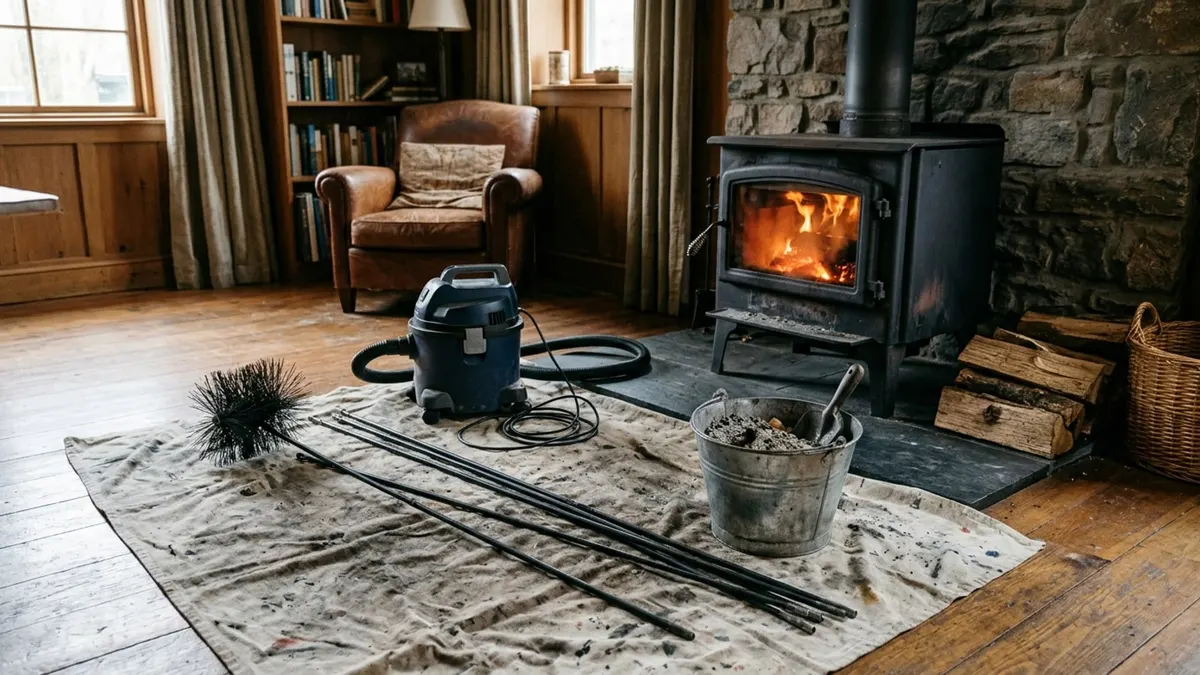
Best Chimney Sweep Kits (2026): Rods, Brushes and Pellet Vent Brushes
Sealegend's 30 foot rotary kit is our pick for a stove chimney: nylon brush on 9 rods that turns on a drill. Sweep between the yearly professional inspections, not instead of them.

Best Pellet Stove Vent Pipe (2026): Type L Kits, Pipe and Clean-Out Tees
DuraVent's PelletVent 3 inch kit is our pick: UL 641 Type L vent in a kit. Pellet stoves need listed 3 or 4 inch Type L or PL vent, never single-wall pipe.

Best Stove Pipe (2026): 6 Inch Pipe, Elbows and What the Manuals Require
Heat-Fab's 22 gauge pipe is our pick: heavier steel than the 24 gauge minimum US Stove names for a single-wall connector. Keep the run short, and never through a ceiling.