
Baseboard Heater Calculator: Amps, Circuit Size and BTU
Work out a baseboard or wall heater's amps, the circuit it needs under King Electric's 125% rule, the most watts a breaker can carry and the heat in BTU.
Affiliate disclosure: product links on this page go to Amazon or to the maker's own store. As an Amazon Associate we earn from qualifying purchases, at no extra cost to you; links to makers' own stores earn us nothing. No retailer or brand sees our picks before they are published or has any say in them. How we choose.
Electric heaters are continuous loads, so their circuit must be larger than their running current: King Electric sizes the wire and breaker for at least 125% of the heater load, which keeps the heaters at no more than 80% of the circuit. Enter the total watts of the heaters on one circuit and their voltage, and the calculator gives the amps, the minimum circuit and whether your breaker is big enough.
How much circuit do baseboard heaters need?
Heater current
8.3 A
watts / volts
Circuit needs at least
10.4 A
heater current x 1.25
Most on a 15 A circuit
2,880 W
80% of 15 A at 240 V
Fits that breaker?
Yes
6.8k BTU/hr of heat
Add the wattage of every heater on the circuit that can run at the same time, and use the voltage on the heaters' nameplates. King Electric treats fixed electric heaters as continuous loads and sizes the wire and breaker for at least 125% of the heater load, which is the same as keeping the heaters at or below 80% of the breaker rating. Wire size also depends on the wire type and terminal rating; check the heater's instructions, your local electrical code and an electrician before you wire anything.
How it works
Amps are watts divided by volts, so a 2,000 watt heater on 240 volts draws 8.3 amps; multiplied by 1.25, the circuit must carry at least 10.4 amps (our arithmetic; King). Heat in BTU an hour is watts times 3.412, which matches Cadet's spec sheet: 500 watts makes 1,710 BTU and 2,000 watts 6,825 (Cadet; our arithmetic).
| Heater watts | Volts | Amps | Copper wire | Breaker |
|---|---|---|---|---|
| 1,000 | 240 | 4.2 | 14/2 | 15 A, 2 pole |
| 2,250 | 240 | 9.4 | 14/2 | 15 A, 2 pole |
| 2,850 | 240 | 11.9 | 14/2 | 15 A, 2 pole |
| 4,000 | 240 | 16.7 | 12/2 | 25 A, 2 pole |
| 1,750 | 120 | 14.6 | 14/2 | 20 A, 1 pole |
An example
Three 1,000 watt, 240 volt baseboards on one circuit total 3,000 watts and 12.5 amps; with the 125% margin the circuit needs 15.6 amps, so a 20 amp circuit, not a 15 (our arithmetic).
The voltage must match
King warns that heaters are not interchangeable between voltages: a 240 volt heater on a 120 volt circuit gives about 25% of its wattage, and a 120 volt heater on 240 can give about four times its wattage, damaging it and creating a fire hazard. Read the nameplate, and in a 120/240 volt panel a 240 volt circuit usually has a two-pole breaker; King adds that breaker looks alone should not decide it.
Reading the table
If your heater's wattage is not in King's table, use the next higher row, never a lower one, King says. Its table shows the 80% rule at work: a 240 volt, 15 amp circuit carries heaters up to 2,850 watts, about 11.9 amps, just under the 12 amps that 80% allows (King; our arithmetic).
Sizing the heat itself
For the room, about 10 watts a square foot is a common start; Stelpro rates 1,250 watts for 125 square feet, and ComfortBilt plans 35 BTU an hour per square foot for post-1982 houses, the same figure in BTU (per the listing; ComfortBilt; our arithmetic).
Several heaters on one circuit
Add the wattage of every heater that can run at the same time, King says; if the total is too much for the circuit, a larger or an extra circuit is needed.
Wire size is not just amps
King bases its wire sizes on 75 degree copper to match typical breaker terminals, and says the final choice depends on the heater nameplate, installation instructions, wire type, terminal ratings, local code and the inspector. Treat the result as planning, then have an electrician confirm it. Heaters are compared in the baseboard and wall heater guides.
Frequently asked questions
How many baseboard heaters can I put on a 20 amp circuit?
On 240 volts, up to 3,840 watts of heaters, which is 80% of the circuit under King Electric's rule (our arithmetic).
Why must the circuit be bigger than the heater?
Heaters run as continuous loads, so King sizes the wire and breaker for at least 125% of the heater load.
How many BTU does a 1,500 watt heater make?
About 5,120 BTU an hour: watts times 3.412, matching Cadet's spec sheet.
Can I run a 240 volt heater on 120 volts?
It will give only about a quarter of its wattage, King warns, and feel barely warm.
What size breaker does a 2,000 watt 240 volt heater need?
It draws 8.3 amps, so 10.4 amps with the 125% margin; a 15 amp two-pole breaker covers it (our arithmetic; King).
Sources
- Sizing the Heater Circuit, King Electric
- CB series baseboard heater installation instructions, King Electric
- F series 120V baseboard heater spec sheet, Cadet
- Electric baseboard owner's guide (F series), Cadet
Cover image: Illustration: Pellet Stove Review
Related guides
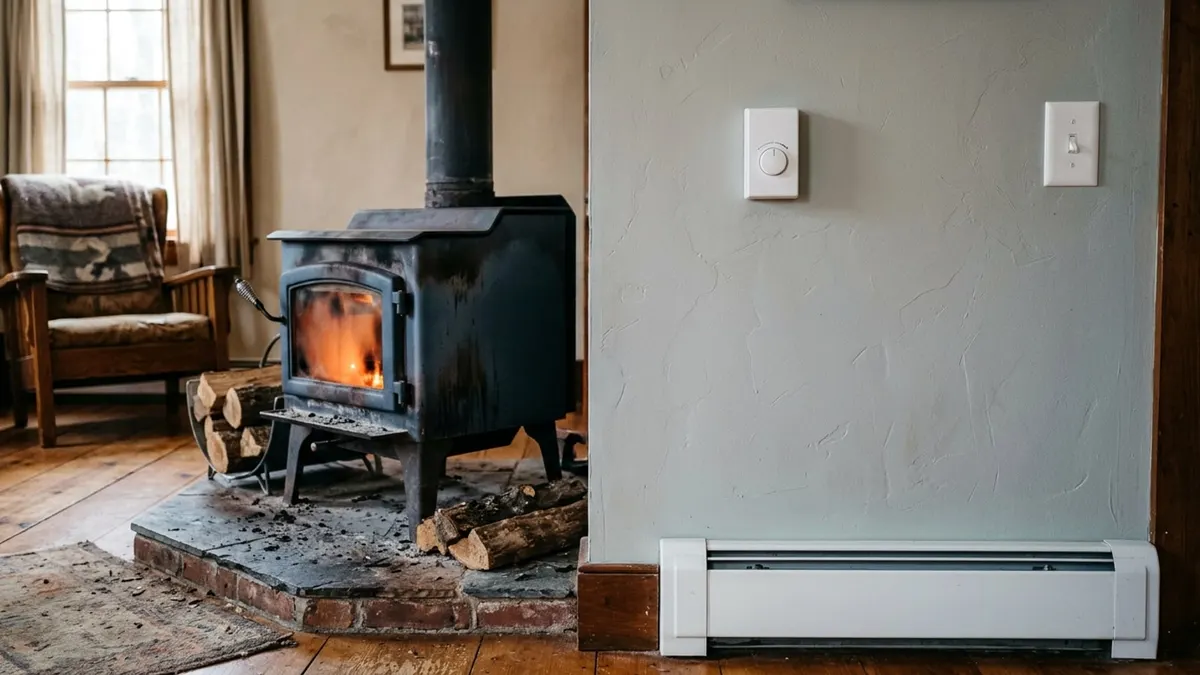
Best Baseboard Heater Thermostats (2026): Line Voltage, Programmable and Smart
Baseboards need a line voltage thermostat, not a 24 volt furnace one. The Stelpro SWT2F is our pick: a double pole, 22 amp dial that fully cuts power when turned off.
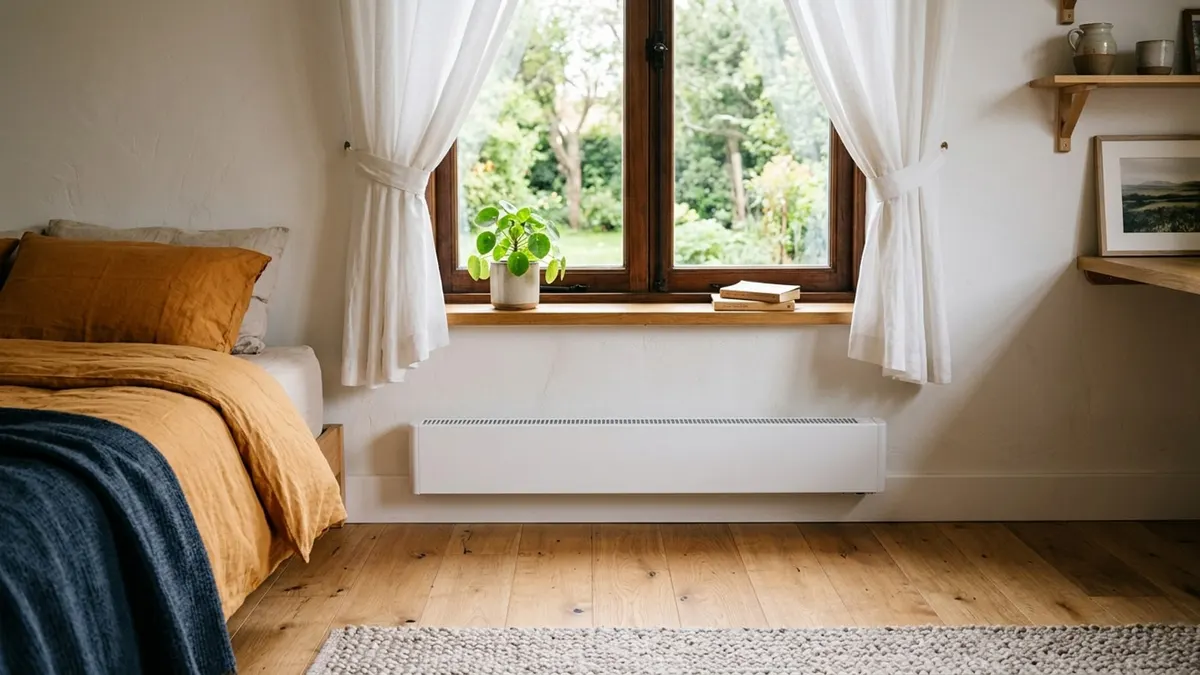
Best Electric Baseboard Heaters (2026): Hardwired and Plug-In Picks
The Cadet F series is our pick: a full-length overheat cutoff, wattages from 500 to 2,500, and a guide that spells out where it may and may not go. Each needs a thermostat.

Best Electric Hydronic Baseboard Heaters (2026): Oil-Filled Heat That Lingers
Cadet's SoftHeat is our pick: its element sits in a copper tube of mineral oil that holds heat after the heater cycles off, for steadier, gentler warmth than a standard baseboard.